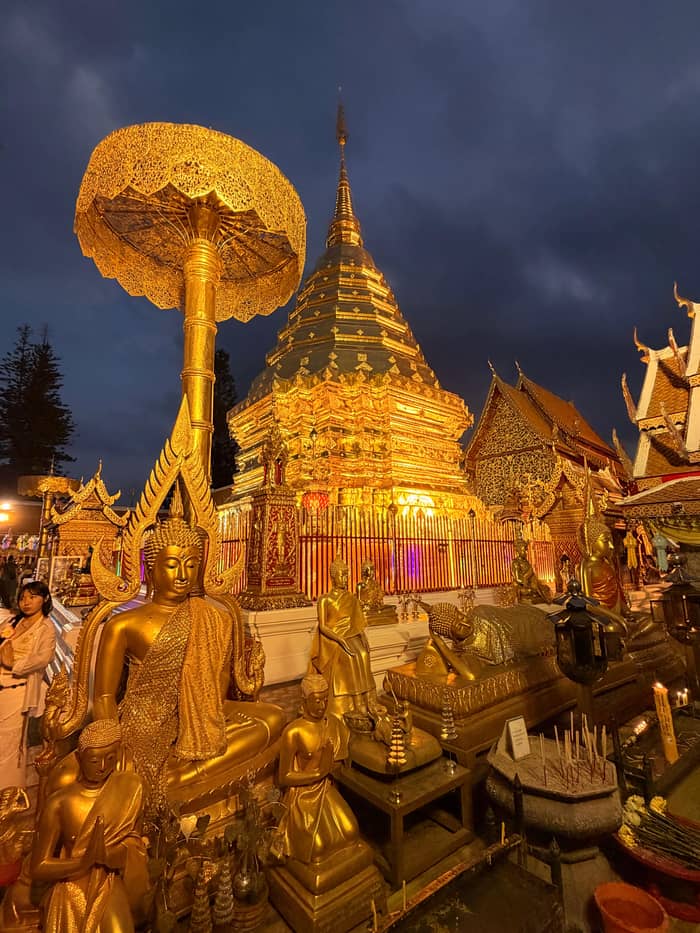
Monument stop
Sunrise tour
Temple, monument and Wat Pha Lat
- Monument30 minutes
- Wat Pha Lat1 hour
- Reviews1,496
Guides
Language
Currency
Find open datesfrom $25 · cancel without payingEstimate your group cost
Compare 3 alternatives
Set your group size and compare the fare for each tour below.
≈
View≈
View≈
ViewConverted at the ECB reference rate, from-prices as listed by GetYourGuide. The precise amount is shown when you book.
When the temple was built according to each official source, the legend of the elephant that chose the site, the pause at Wat Pha Lat and the monk who opened the road.
Editorial team, doisutheptour.top · Updated November 16, 2026 · A 7 min read
In brief
The question of when was Doi Suthep temple built gets different answers from different official pages, and the differences come from scale, not from disagreement. The Chiang Mai province's tourism page is the most exact: its year for the temple is 1383, the year it gives for enshrining the Buddha's relics.1 TAT's newsroom is looser, placing the temple in the late 14th century and listing it among the most sacred Buddhist places in Thailand.2 Both point to the same decades.
TAT's own temple page counts in Buddhist centuries, which is how many Thai sources date old temples. It calls Wat Phra That Doi Suthep the most important temple in Chiang Mai and says it was built in the early 19th Buddhist century.9 That most likely points to Buddhist years in the early nineteen-hundreds, which land toward the end of the fourteenth century in the Western calendar, as the province's year does.1 None of these pages gives a builder's name or a day, so a firm date on a sign at the gate is the province's year, and anything more detailed belongs to the chronicle rather than to the record.
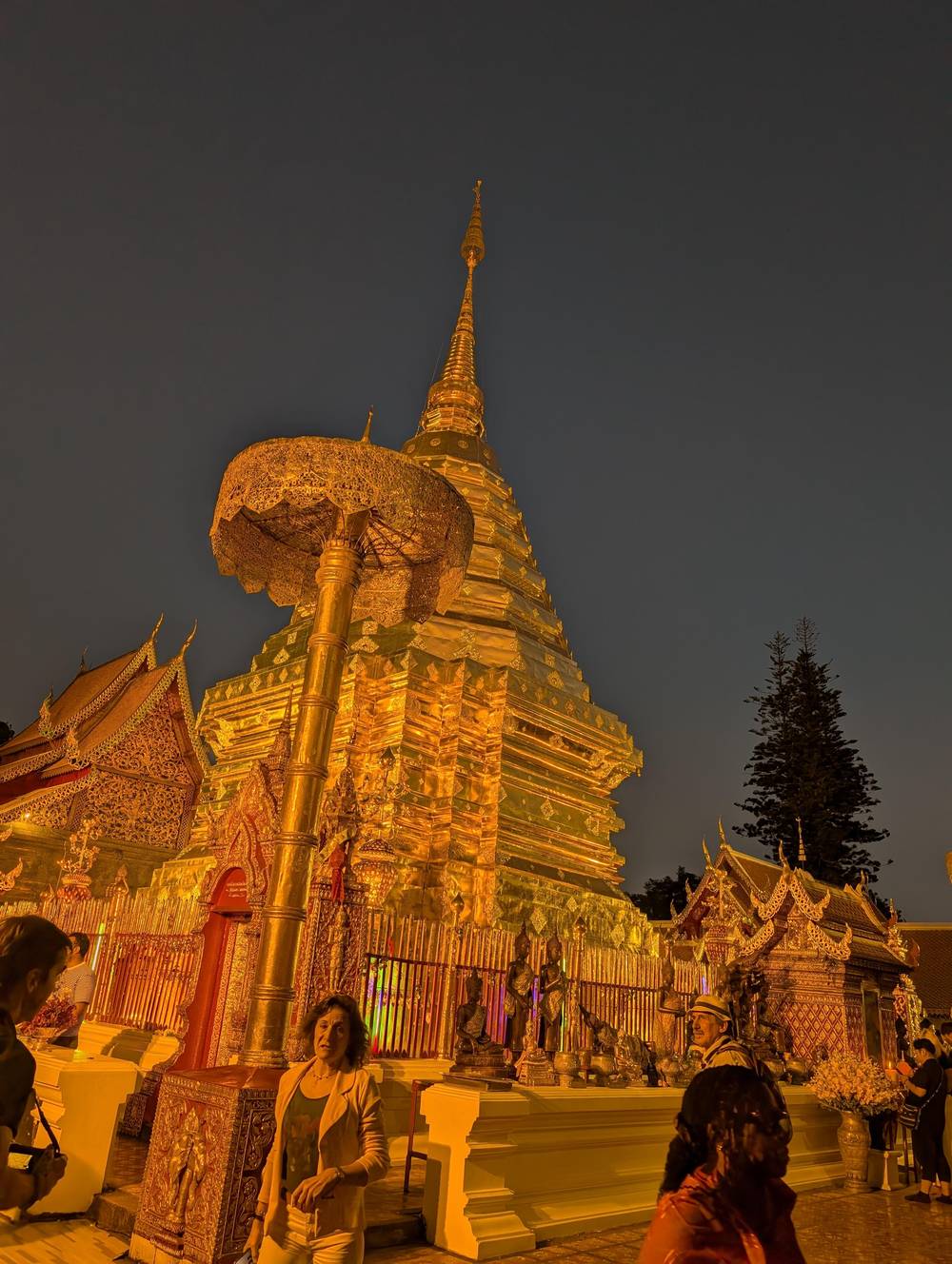
That is also the honest answer to how the mountain was named. Before the temple, the hill went by another name, Doi Oi Chang, and the park traces the present name to a hermit, Wasuthep, who sat in meditation here long before any temple stood on the ridge.10 So the story of the place begins earlier than the chedi, and the chedi itself, the golden spire that TAT sets 1,056 metres up, is the part that visitors climb to see.11
Sources side by side
| Source | What it says | How it dates |
|---|---|---|
| Province | Built to enshrine Buddha's relics1 | The year 13831 |
| TAT newsroom | One of the most holy sites2 | Late 14th century2 |
| TAT temple page | Most important temple in Chiang Mai9 | Early 19th Buddhist century9 |
| Fine Arts archive | A relic on a royal elephant3 | A chronicle, no year quoted |
| Doi Suthep park | A hermit named Wasuthep10 | Long before the temple10 |
The sources answer different questions, so their dates do not conflict.1,9
The founding story is older than any plaque, and the Fine Arts Department's National Archives in Chiang Mai prints its core. It quotes the Yonok chronicle on the earlier relic that Phra Maha Suman had brought from Sukhothai, for which a fitting site was sought.12 The way the chronicle solves the problem is the part everyone remembers: the king's men placed the casket above a royal elephant and let the animal go, so that the elephant, not the court, would pick the place.3
The chronicle also says where the animal went. It left through the head gate of the city and climbed Doi Suthep, then paused a short while at Pha Lat before going on to the summit, where it stopped.4 A second official source, the Doi Suthep Nature Center of Chiang Mai University, adds that Wat Pha Lat was built in the time of King Kue Na as a memorial to that divination.13 The temple on the summit and the monastery on the slope are therefore halves of one story.
Treat the legend as the people's own account of why the temple stands where it does, not as an engineering report. We quote one printed passage and no more, because retellings differ in their details and the sources we could open are in Thai. What the sources agree on is the shape of the story: a relic, an animal that chose, a pause on the slope and a final stop at the top. It is also why the question of how old is Doi Suthep temple has an answer in years and another in tradition.
Distances on the history trail
Wat Pha Lat is the pause in the story and in the climb. TAT dates the monastery to the middle of the 14th century, describes it as a jungle stop beside the road, a rest for travellers heading uphill, and says monks took it up for meditation in the 1930s.24 It translates the name as Monastery at the Sloping Rock.25 The archive offers a more earthy origin for the word: people and elephants slipped on the way up the mountain, and the monastery took its name from the slip.26
The buildings carry a second chapter, and it is Burmese. The archive says the chedi at Wat Pha Lat is in Burmese style from the time of Kruba Srivichai, and that the vihara was built in his time by Burmese craftsmen.20 The same page mentions a well that was rebuilt over several eras and an old sala, which fits a place that has been repaired in layers rather than built once.27 A short wander among them is a lesson in how old Lanna sites were kept alive.
The old route is still walkable, and the archive describes it. From the area by the Channel 7 television station the nature trail runs about 2 kilometers to Wat Pha Lat, and with the forest shortcut up to the temple the round trip is about 10 kilometers.14 It calls the path the ancient route by which King Kue Na brought the relic to Doi Suthep, with natural beauty and historic sites along the way.5 A visit to Wat Pha Lat fills in the part of the story that the golden terrace leaves out.
Quick check
Pick what interests you and see where the sources send you.
If The legend of the elephant
Wat Pha Lat
The chronicle has the elephant pause there before the summit.4
If The monk who opened the road
The monument
The Kruba Srivichai Monument stands opposite the park headquarters.19
If A Burmese-style chedi
Wat Pha Lat
The chedi and the vihara date to Kruba Srivichai's time.20
If The golden chedi and the stairs
The temple terrace
TAT describes serpent statues on the stairs and a golden Chiang Saen style pagoda.21
If The student tradition
The university walk
The walk has run every year since the university began in 1964.22
Follow the story
Monument stop
Temple, monument and Wat Pha Lat
Pha Lat first
Wat Pha Lat, then the temple
This site's tour
Wat Umong, then the temple
The road that most visitors drive today has a monk at the centre of its story. Chiang Mai University says its students walk to the Kruba Srivichai Monument to pay respect to the monk who forged the way for the road up to the temple.6 The monument stands at the bottom of the climb, and the park says its headquarters sits on the right opposite it, past the zoo on Huai Kaeo Road.19 From the monument the park reckons about 10 kilometers to the temple.16
The last part of the road has its own date. The university says the Khunkanchananon curve is named after a nobleman who was tasked with completing the final stretch of the road to the temple in 1935.7 It also calls one of the final curves of that road the sheerest and most challenging.23 If the bus or the red truck leans on a bend in the upper part, that is the hillside the road builders had to cross, and the reason that older pilgrims walked.
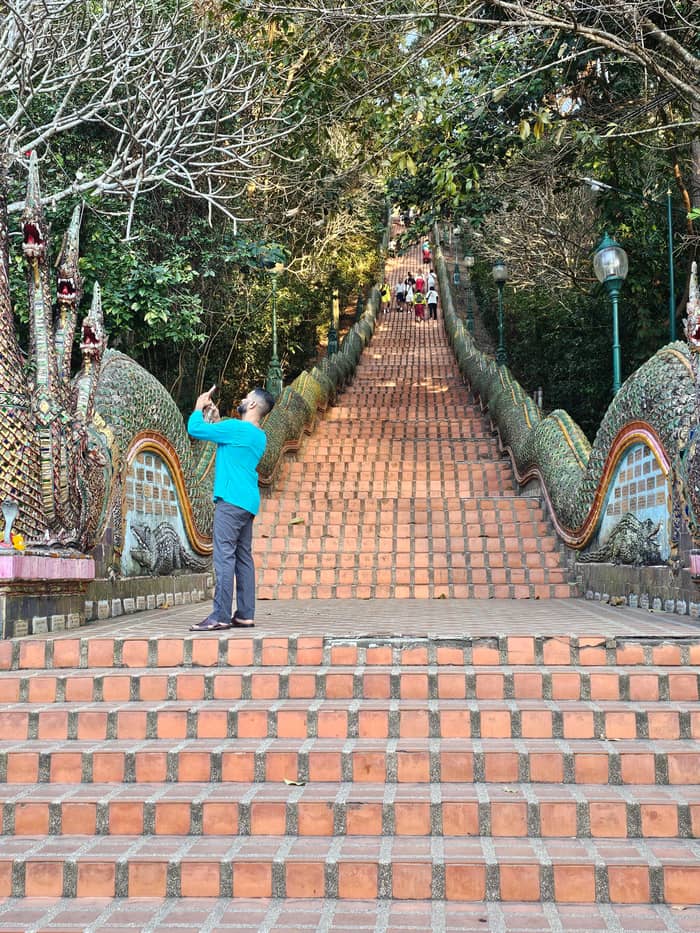
Before the road, the climb was on foot, and the temple's own stairs still give the pilgrim's route a place. The province says you can drive up to the higher platform, while many devout Buddhists choose to walk the steps up to the hilltop.32 From the parking area TAT reckons more than 300 steps to the temple, with a funicular cable car for anyone who prefers to ride.28 The road made the mountain a day trip, and the stairs kept it a pilgrimage.
How the story runs
The mountain
The hill carried another name before the hermit's.10
The relic
A royal elephant carries the casket and is let go.3
The founding
The province gives 1383 as the year of the temple.1
A pause
The elephant halts at Pha Lat before the summit.4
The road
The reserve
The mountain becomes the 24th national park in 1981.8
The mountain around the temple has a history of its own as a protected forest. The park says the Doi Suthep forest was declared a restricted forest by royal decree on 17 May 1949.33 A decree of 14 August 1981 then made Doi Suthep-Pui the 24th national park, with 161 square kilometers, and a decree of 1982 enlarged it to approximately 261 square kilometers.8,34 That protection is why the road to the temple climbs through forest, not through houses.
A younger tradition keeps the old pilgrimage alive. Chiang Mai University dates the first group of students who walked up Doi Suthep to 1964, the year its own history begins.35 It describes the annual freshman walk as a symbolic climb to pay homage to the relic, organised every year since the university's inception in 1964, and gives its length as more than 12 kilometers.22,18 A visitor who meets a long column of students on the road has met the oldest part of the temple's modern story.
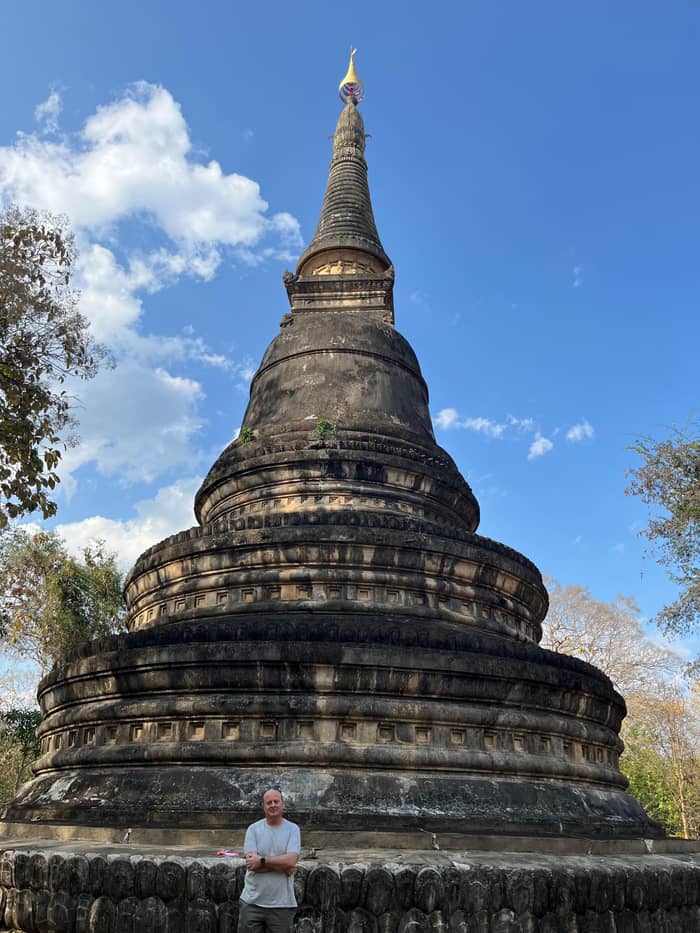
The temple still runs on the calendar of pilgrimage. TAT's temple page lists the Tiaw Khuen Doi Festival, the trip up the hill to worship the relics enshrined there.36 Tours fit the story in practice. The sunrise tour on this site's listings stops 30 minutes at the Kruba Srivichai Monument as well as the temple and Wat Pha Lat, and the site tour pairs the temple with Wat Umong in the evening. Choose the one that follows the part of the story you want.
Video
The Arifs on YouTube · Nothing is fetched until you hit play.
One of the final curves in the road to Wat Phra That Doi Suthep is the sheerest and most challenging.
On the mountain
FAQ
The park says the hermit Wasuthep meditated on the hill, which was first called Doi Oi Chang.10
In a chronicle the archive quotes, the casket was set above a royal elephant and the animal was let go.3
Its record lists the monument for 30 minutes between the temple and Wat Pha Lat.
Sources
Planning a trip up Doi Suthep? Ask a real person here.